The American bond system started as a practical device, not a political lightning rod. Regional sheriffs, early american magistrates, and traveling defendants needed a means to handle pretrial freedom without clogging prisons or losing offenders that had every incentive to wander out of community. Bond, at its core, is a pledge backed by money or residential property that a person will stand for court. Bail bonds are the private market variation of that promise, where a qualified bondsman assures the court an accused's appearance for a fee. That portable audios simple. Its history, with waves of reform, economic incentives, and constitutional boundary lines, is anything but.
English roots and American adaptations
American bail legislation acquired its bones from English practice. Middle ages sheriffs can restrain or release charged individuals, occasionally extracting sureties from neighbors ready to attest them. With time, Parliament and the usual legislation controlled misuses. The 1275 Law of Westminster mapped out groups of bailable and non-bailable offenses. The 1689 English Costs of Civil liberties restricted extreme bond, engraving the principle that cash need to not be made use of to squash freedom before trial.
When nests hair transplanted these ideas, they adapted them to a thinly staffed frontier. Courts fulfilled occasionally, transportation was slow-moving, and prisons were scarce and unhygienic. Bond was a useful requirement. Very early American statutes favored broad bailability and judicial discernment. The expression "too much bail shall not be called for" went across the Atlantic and landed in the Eighth Change, a guarantee covered to a Constitution questionable of untreated power. That condition does not produce a right to bail in every situation, yet it limits how cash can be used to cage individuals prior to guilt is proven.
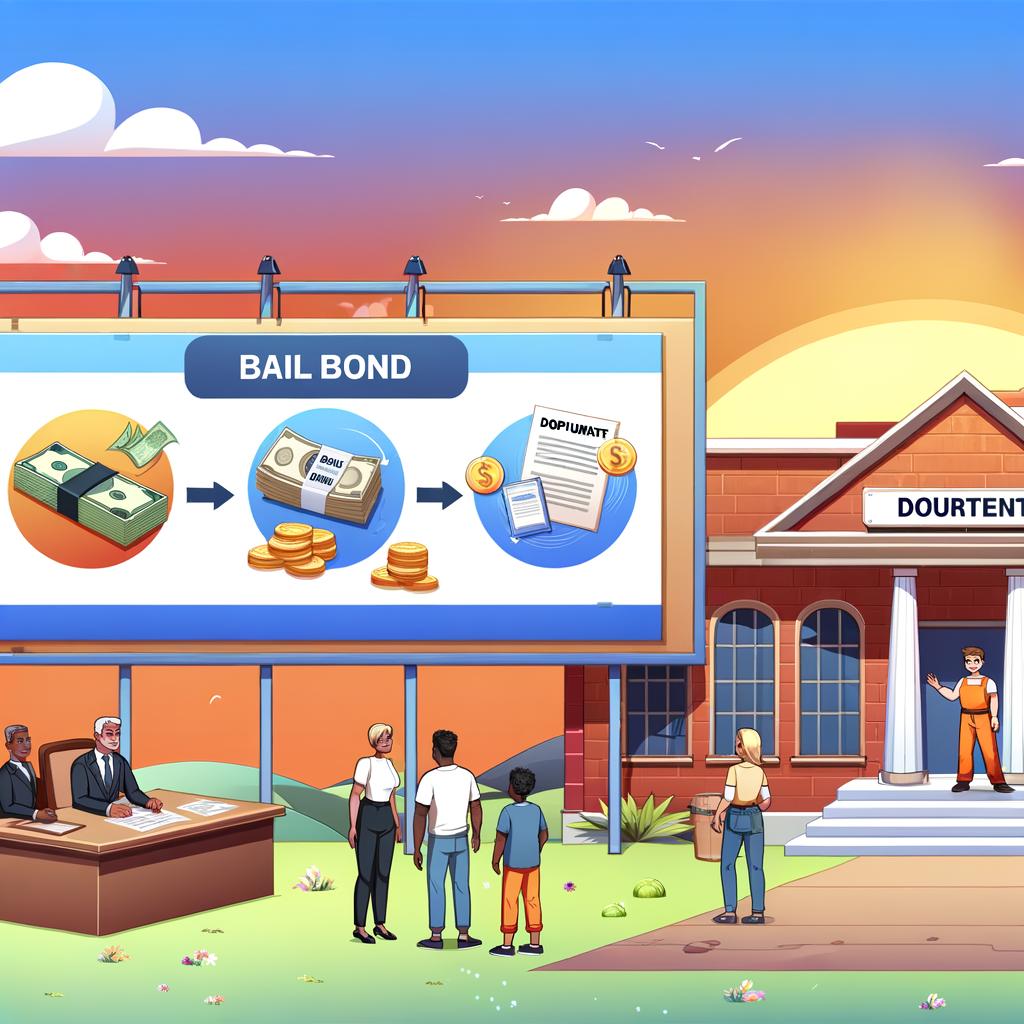
By the 19th century, a distinct American function arised: business surety. Instead of depending only on family members or personal recognizances, offenders could transform to a bail bondsman. The bondsman, accredited by the state, would promise the full bail total up to the court and bill the accused a nonrefundable charge, typically 10 percent, to assume the risk. That cost was the price of pretrial freedom for those without cash money or security to post bail directly.
The birth of the bail bonds industry
Commercial guaranty entered the criminal courts in the late 1800s and early 1900s, accelerated by urbanization, wheelchair, and professionalization. Courts demanded reputable guarantors. Bondsmen found out to analyze flight danger, collect individual data, and release practical tools like suggestions and check-ins long before those tactics had academic tags. Some firms operated with self-control, depended on security, and established reputations with courts and clerks. Others reduced edges or published bonds for customers who were not most likely to show up, after that pursued them strongly when they missed court.
That hunting element, the fugitive recovery company, became part of the social material, sometimes glamorized and frequently misconstrued. Bounty searching was never ever a free-for-all. Its legitimacy hinges on agreement regulation and state licensing regimes. A defendant who signs a bonding agreement usually grant particular apprehension powers by the bondsman or an employed representative if the defendant stops working to show up. States differ in their regulations, and specialist bondsmen follow those guidelines carefully, or they discover themselves locked out of courthouses by judges that value integrity over bravado.
By the mid-20th century, the bail bonds market had a recognizable shape. Bondsmen maintained shops near court houses, advertised in telephone directory, and grew connections with defense lawyers. Costs clustered at 10 percent, sometimes greater for risky situations. The business version prospered in territories where courts establish monetary bail as the default. It additionally seeded the core debate that still defines arguments today. Should an individual's flexibility turn on their accessibility to cash? If fees are nonrefundable even when instances are rejected, is the system extracting riches from people assumed innocent?
Constitutional guardrails and a very early reform wave
The Supreme Court has drawn the limit lines with restriction. In Heap v. Boyle (1951 ), the Court emphasized that bond established more than what is sensibly essential to make certain appearance goes against the Eighth Amendment. In Carlson v. Landon (1952 ), the Court held that the Constitution does not guarantee bail for all offenses or in every context. The Court's the majority of essential contemporary ruling, United States v. Salerno (1987 ), supported the Bail Reform Act of 1984, allowing preventive apprehension in government situations when clear and convincing proof revealed a defendant positioned a risk to the area. Salerno verified that public safety might warrant apprehension without violating the Eighth Modification, as long as treatments were robust.
Reform began previously at the government degree. The 1966 Federal Bail Reform Act focused on launch on recognizance and nonfinancial problems, mirroring research study that most defendants returned to court without a monetary stake. The pendulum swung back in 1984, when Congress added public safety to the calculus and produced an extra official pretrial solutions device. In practice, federal courts moved away from regular cash bail. Numerous defendants were launched under supervision, some were apprehended after adversarial hearings, and money bond ended up being rare in government cases.
States charted their own courses. Some mirrored federal reforms, buying pretrial services units that review risk, suggest problems, and supply reminders. Others continued to lean heavily on monetary bond and the personal bond market. The range is large. An individual arrested for the very same crime could encounter a no-money launch in one county and a $25,000 bond in one more, depending on neighborhood policies, society, and sources. That variant gas both plan testing and public frustration.
How a bail bond operates in practice
Anyone that has rested with a household in a bail office recognizes the math and feeling that clash at that counter. Suppose a court sets bond at $50,000. Few households can create that amount in cash money or building within hours. If they publish cash bail directly, the court holds it until the instance finishes, after that returns it minus costs and penalties if the individual appeared as required. If the family turns to a bail bondsman, they pay a fee, often 10 percent, often with security. That charge is nonrefundable. The bondsman files a bond with the court and assumes the commitment to pay the total if the defendant fails to appear and the bond is forfeited.
Risk administration defines the bail bondsman's craft. Analyze the offender's connections, work, prior appearances, substance usage, and travel patterns. Need cosigners. Obtain call information for loved ones and companies. Set up check-ins prior to court days. Use text reminders and ride arrangements. If someone misses out on court, act rapidly to repair it. Lots of failings to appear are not gets away yet complication about days, transportation issues, or stress and anxiety. A punctual contact us to the clerk and a voluntary surrender can treat the default, protecting the bond and the defendant's freedom.
From the court's perspective, a bond is a conditional guarantee. If the assurance breaks, judges have devices. They can release a bench warrant, routine a hearing, and choose whether to forfeit the bond. They can provide credit score for partial efficiency if the bondsman returns the defendant quickly. Neighborhood technique issues. Some jurisdictions are strict, others more flexible if the underlying crime is minor.
Economics, rewards, and edge cases
The bail bonds market runs on rewards. Keep loss reduced, deal with court team well, and maintain customers showing up. That placement can produce dependable outcomes. The friction turns up in three places.
First, the nonrefundable fee is a blunt instrument. An individual who is acquitted or whose charges are rejected has actually still paid the bail bondsman fee. Doubters call that unfair. Bondsmen react that the fee covers the threat, the hours, and the financial exposure that come with every bond, also when things go smoothly.
Second, collateral can become a wedge within family members. Moms and dads or cousins usually promise cars and trucks or acts to secure a bond. If the defendant misses out on court and can not be produced, the bail bondsman can relocate versus security. Several bondsmen avoid foreclosure unless they have no choice, since area reputation issues. Still, the risk is genuine, and it changes family dynamics.
Third, low-level instances can develop outsized worries. A $5,000 bail on a shoplifting case equates right into a $500 fee, which could amount to a week's salaries. In some regions, courts and prosecutors will accept release on recognizance after a day or more, making the preliminary bond an unneeded cost. In others, the fee is the cost for going home that night. The rhythms differ and so does the general public's tolerance for those compromises.
The modern reform age and the information turn
Over the last decade, reform sped up. Jurisdictions began to determine pretrial look prices and brand-new criminal activity, instead of count on presumptions. The numbers often tended to reveal that basic interventions like tips by text or phone improved appearance, and that many people went back to court without an economic risk. New Jacket's 2017 overhaul all but eliminated cash money bond for threat analyses and supervised launch. The early outcomes showed continual court appearance prices and lower pretrial jail populations, with later adjustments to address fierce crime concerns.
California tried a statewide change in 2018 with Senate Costs 10, replacing cash bond with a risk-based system. Voters rejected the procedure in 2020, mirroring uncertainty of mathematical devices and the convenience of known systems. At the same time, the California High court regulationed in In re Humphrey that courts need to consider a defendant's capacity to pay and utilize nonfinancial problems whenever possible. The outcome is an anxious crossbreed. Bail stays in use, however judges are under stress to calibrate quantities and take into consideration alternatives.
Illinois moved furthest, applying the Pretrial Justness Act in 2023 and finishing money bail statewide. Juries now make a decision launch or detention based on safety and security and flight risk, after adversarial hearings. Early records show reductions in pretrial jail populaces without a spike in failures to appear, though data collection stays unpleasant and partisan spin speeds up after every high-profile incident.
New York changed bail legislations in 2019, sharply restricting money bond for the majority of violations and nonviolent felonies. 2 rounds of amendments followed to offer judges extra discernment. Via the noise, look rates have stayed high. The discussion usually merges rearrests and pretrial release, however much deeper analysis generally shows that a https://mariopial489.trexgame.net/recognizing-bail-bond-costs-and-refunds tiny fraction of accuseds drives public security concerns, no matter the bond regime.
The business bail sector has fought many of these reforms, in courts and at the tally box, saying that exclusive guaranties outmatch government-supervised release at obtaining individuals back to court. Independent research studies show blended results that depend upon local practice. In position with solid pretrial solutions, robust reminder systems, and clear consequences for missed out on court, nonfinancial launch does well. In position without those supports, bondsmen load a gap, especially after-hours and on weekend breaks, when courts and pretrial staff are scarce.
The constitutional core still matters
Despite experiments, two principles hold steady. Bail exists to make certain appearance and, in many territories, to safeguard public safety. It can not be made use of to penalize. Excessive bond violates the Eighth Amendment when it exceeds what is reasonably essential to accomplish those goals. Ability to pay is a crucial part of that calculus. Courts increasingly call for on-the-record findings when they establish bond that a person can not pay for. Those demands are not mere procedures. They are the constitutional spine that keeps pretrial apprehension from ending up being a tool of poverty-based incarceration.
Salerno stays the anchor for preventative apprehension in the government system and a rule of thumb for states. If the government looks for to restrain a person due to risk or high trip danger, it needs to prove that case with proof in a hearing, not by establishing bail so high that release is impossible. That distinction sounds technological, however it forces clarity. Apprehension is a major action that must be transparent, not hidden in numbers.
Technology, text, and less prestige than TV
A silent revolution in pretrial management has absolutely nothing to do with court room drama and every little thing to do with telephone number. Courts that send out straightforward suggestions see fewer missed appearances. Some go further, supplying maps, transit courses, and a choice to request a new date prior to a bench warrant concerns. These tools cost pennies compared to jail beds, and they treat accuseds as individuals with unpleasant lives, not as trip dangers by default.
Electronic tracking is more intricate. Ankle joint arm bands can guarantee a judge and allow launch when detention would or else be gotten. They likewise impose everyday charges in numerous jurisdictions, transforming release into a metered solution. Tracking can be a lifesaver in a high-risk situation or an unnecessary concern in a low-level one. On this terrain, information issue. Period, fee waivers, clear elimination criteria, and prompt evaluation of incorrect informs fix a limit between accountable guidance and corrective surveillance.
What bail bondsmans do past the bond
A skilled bail bondsman serves as a translator between systems. A mom calls at midnight from a holding cell phone line. A first arraignment is scheduled for the morning. The bondsman describes the timeline, the likely bail array based on local norms, and whether a cosigner will be required. After launch, the bail bondsman pushes customers to upgrade addresses, assists them read their notifications, and tracks continuations. When individuals deal with warrants for missed dates, a phone call to the bail bondsman often comes prior to a contact us to an attorney. That human link is part company, component community service, and component risk management.
Some agencies run reference networks for therapy and housing. A client with an opioid use condition is much less most likely to make it to court if detox is not attended to. When bondsmen grow these connections, they decrease their own threat while improving outcomes. There are limits. A bail company is not a social solution. Time is cash, and unremunerated labor can not extend forever. Still, the most effective operators build adequate pillow to aid maintain those that will reply to help.
Where the bail bonds sector is diminishing, and where it is not
The industry has lost ground in jurisdictions that decreased dependence on cash money bail. New Jersey's overhaul reduced the market considerably. Washington, D.C., which counts on pretrial services and does not make use of commercial bond, has actually not had a bonds industry for decades. Illinois' brand-new structure eliminated it over night. The golden state's patchwork limits growth, specifically in regions that expanded pretrial launch. Yet in big swaths of the nation, especially in the South and parts of the Midwest, commercial guaranty stays basic. County prisons, county judges, and region staffs run systems that are in your area meaningful, even if they encounter national reform narratives.
When criminal offense spikes, the pendulum relocations. Political leaders under pressure call for "more stringent bond." That phrase generally means more apprehension or higher bail quantities, which typically restores need for bonds. When prison overcrowding or budget pressure ends up being unsustainable, courts broaden citations, desk look tickets, and nonfinancial launch, which depresses the marketplace. The industry's dimension is a barometer of plan options, not a repaired constant.
Myths that persist and realities that help
Here are 3 explanations that often tend to enhance discussions regarding Bail Bonds:
- Bail is not a fine. A fine punishes after conviction. Bail is a pretrial device, and its financial elements are not meant to penalize. When bond operates as penalty, courts are bound to take another look at it. Bond costs are not refunded. Paying a bondsman resembles purchasing insurance. If whatever works out, you still paid for the risk transfer and the service. If you can post cash money bond directly, and you are positive you will not miss out on court, you might favor to prevent the fee. Most failures to appear are not leaves. They are missed out on buses, childcare dilemmas, or fear. Solutions that permit fast rescheduling and send tips have a tendency to reveal fewer warrants and far better conformity without increasing risk.
The limitations of forecast and the value of judgment
Risk analysis tools have guarantee and actual restrictions. They can bring uniformity and minimize naked wealth-based decisions. They can additionally inscribe historical biases if fed skewed data. A tool that evaluates previous apprehensions will penalize people from communities with hefty authorities existence also when billing patterns changed. Static elements do not catch sudden positive adjustments, like a new work or stable real estate, and they do not see a descending spiral before it crests. Good judges make use of tools as one input, not an alternative to human judgment. Good defense attorney bring context that numbers miss.
Bondsmen develop their own heuristics. A defendant that answers the phone on the initial ring and provides to bring pay stubs to the office often tends to be trusted. An individual with three different phone numbers in 2 weeks benefits warn. These monitorings are not scientific, however they are not arbitrary. Lived experience fills out the voids between court routines and policy reports.
Where reform can focus without shedding the plot
Sustained progress originates from pragmatic actions that appreciate both liberty and safety and security. Courts need to establish bond just when necessary. When they do, capacity to pay have to be front and facility. If nonfinancial problems can moderately make sure look or safety, use them. Invest in reminders, transport help, and fast warrant recall for low-risk failures to show up. When preventative detention is looked for, need proof and a hearing, and keep apprehension narrowly tailored to the cases that really require it.

Commercial surety still has a function in many jurisdictions. Where it stays, regulators should police abuses without strangling reputable operations. Clear forfeit procedures, prompt notice, and reasonable credit score when an offender is returned go a lengthy way. Transparency regarding costs and security protects families from shocks. Partnership with pretrial solutions can transform a simply financial setup right into a safeguard that lowers turmoil and enhances compliance.
The long arc, not a straight line
The tale of bail bonds in the USA started with English guarantees versus excess and developed via American improvisation. For generations, the bail bonds industry provided a bridge in between jampacked jails and active courts, generating income from threat in a way that made good sense to regional stars. Agitators exposed the expense that come close to troubled poor offenders and examined whether cash was the appropriate bar to draw. Policymakers responded to with statutes, algorithms, and solutions that sometimes boosted results and occasionally stumbled.
The terrain ahead will maintain shifting. Economic cycles, crime patterns, court stockpiles, and innovation will continue to reshape practice. What should not change is the constitutional humbleness that pretrial freedom needs. A person jailed is still presumed innocent. The objective is not to ensure excellence, but to take care of risk with justness and candor. When systems deal with individuals like members of a neighborhood as opposed to troubles to be refined, appearance rates boost, public security gets a quiet ally, and the old quarrel over bail looks much less like ideological background and more like management.
Bail bonds rest inside that management difficulty. They are neither hero neither scourge. They are a device that expanded in the gaps of American justice, helpful in some locations, misused in others, and constantly shaped by regional selections. Understanding just how they arised, why they persisted, and where they fit today helps us steer the following round of adjustments with fewer mottos and even more facts.